

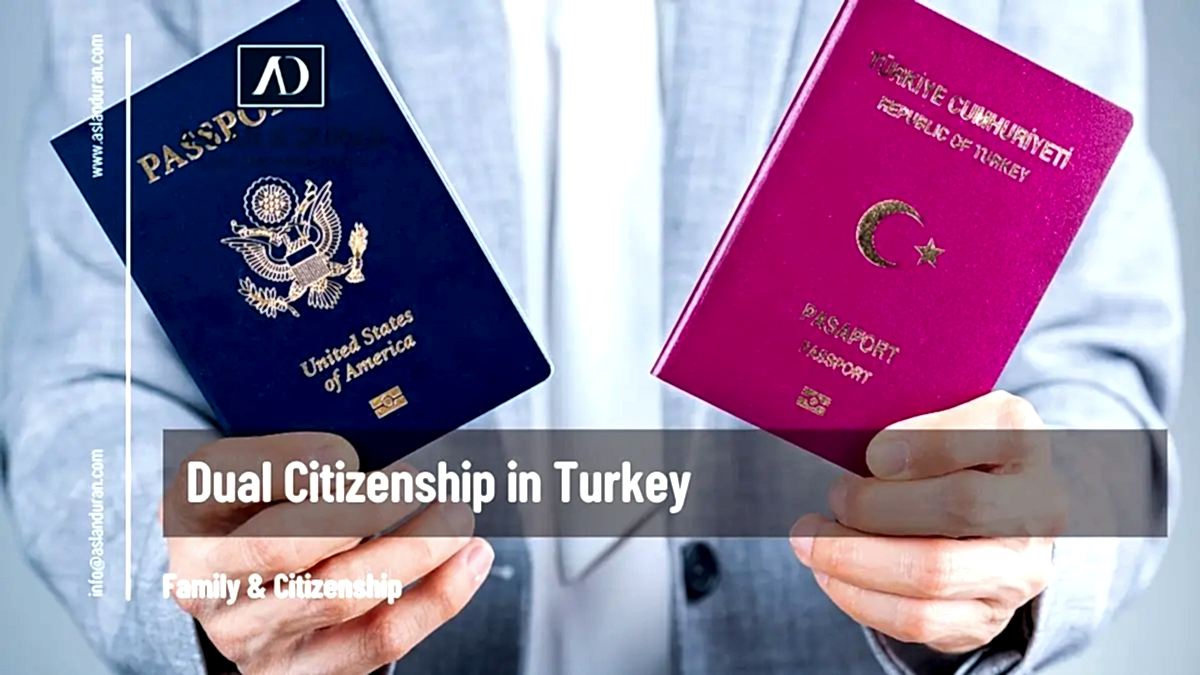
When high-net-worth individuals, expats, and descendants of Turkish nationals consider acquiring a second passport, their primary motivation is usually freedom—freedom to travel, invest, and secure their family’s future. However, this pursuit is often accompanied by a significant fear: “Will I be forced to give up my current nationality?” For many, their original passport represents a lifelong connection to their homeland, established businesses, and extended family. Giving it up is simply not an option.
The short and reassuring answer is: Yes, Turkey fully recognizes and allows dual (and even multiple) citizenship. However, international law is a two-way street. While the Turkish government welcomes you to hold multiple passports, the ultimate success of your dual citizenship strategy depends heavily on the legal framework of your home country.
At Aslan Duran Law Firm, our dedicated team of English-speaking attorneys in Ankara specializes in navigating these complex, cross-border legal realities. In this comprehensive guide, we will break down the rules of dual citizenship in Turkey, the potential hurdles from your home country, and the specific obligations you will face as a dual national.
The Stance of Turkish Law on Multiple Nationalities
The legal foundation for this topic is the Turkish Citizenship Law No. 5901. The Turkish Republic does not require foreigners who acquire Turkish citizenship to renounce their previous nationality.
Whether you are obtaining citizenship through the Turkish Citizenship by Investment program, through marriage, or via Turkish Citizenship by Descent, the Turkish government’s policy remains identical: you are free to keep your original passport.
In fact, Turkish law does not limit you to just two nationalities. If you are already a dual citizen of, for example, the UK and Canada, you can legally add Turkey as your third nationality without facing any objections from the Turkish authorities.
The Catch: What Does Your Home Country Say?
This is where the legal process requires careful strategic planning. The concept of dual citizenship requires the consent of both nations involved. While Turkey says “yes,” your home country might say “no.”
To help our clients understand their standing, we generally categorize countries into three groups regarding their stance on dual nationality:
A. Countries That Fully Allow Dual Citizenship
If you are a citizen of one of these nations, you can acquire Turkish citizenship smoothly without any risk of losing your original passport.
Examples: The United States, the United Kingdom, Canada, Australia, New Zealand, France, Italy, Sweden, Switzerland, and Russia.
B. Countries That Strictly Forbid Dual Citizenship
These countries adhere to a single-nationality principle. If you voluntarily acquire Turkish citizenship, your home country may automatically revoke your original citizenship, or require you to formally renounce it before taking the Turkish oath.
Examples: China, India, Japan, Saudi Arabia, the United Arab Emirates, Kazakhstan, and Singapore.
Note: For Indian nationals, acquiring a foreign passport means losing Indian citizenship, but they can apply for an OCI (Overseas Citizen of India) card, which grants many of the same practical rights (except voting) back in India.
C. Countries with Conditional or Changing Rules
Some nations allow dual citizenship only under specific, strict conditions, or have recently reformed their laws.
Germany: Historically, Germany strictly restricted dual citizenship for non-EU nationals. However, the landmark modernization of the German Nationality Act (effective recently) has drastically changed this, now generally permitting dual citizenship. This is a massive advantage for the Turkish diaspora and German investors.
Spain and the Netherlands: These countries generally prohibit dual citizenship, but offer complex exceptions (such as being married to a national or specific descent-based clauses).
Before making any investments or filing applications, our Turkish citizenship lawyer team conducts a thorough jurisdictional check to ensure your primary citizenship is not accidentally jeopardized.
What If Your Country Forbids Dual Citizenship? (The Alternatives)
If you hold a passport from a country like China or Saudi Arabia and do not wish to lose it, the direct citizenship route might not be viable for you. However, Turkey offers robust alternatives that provide nearly identical benefits without triggering the loss of your home nationality.
Long-Term Residence Permits: Real estate investors can secure a stable, renewable residence permit without crossing the threshold into citizenship.
The Turquoise Card (Turkuaz Kart): Often referred to as Turkey’s “Green Card,” this is granted to highly qualified professionals, investors, and scientists. It grants an indefinite right to work and reside in Turkey, bypassing the standard Work Permit renewals, but it is not a citizenship status, thereby protecting your original passport.
Key Obligations for Dual Citizens in Turkey
Holding two passports is a privilege, but it also comes with civic responsibilities.
A. Taxation on Global Income
A common myth is that becoming a Turkish citizen immediately subjects you to Turkish taxes on your global wealth. This is false. In Turkey, taxation is based on residency, not citizenship. If you live outside of Turkey for more than 183 days a year, you are generally considered a “Limited Taxpayer” and are only taxed on income generated within Turkey (e.g., rent from your Istanbul property).
For a deep dive into how to legally structure your wealth, read our complete guide on Tax Implications for New Turkish Citizens.
B. Mandatory Military Service
For male applicants, this is often the most pressing concern. Turkey has mandatory military service for male citizens. How does this apply to new dual citizens?
Citizenship by Investment/General Naturalization: If you acquire Turkish citizenship after the age of 22, you are automatically exempt from active military service in Turkey.
Citizenship by Descent: If you are recognized as a Turkish citizen by birth right (Jus Sanguinis) and are under the age limits, military service rules apply. However, Turkey recognizes military service completed in certain foreign countries. If you served in your home country, you may be exempted in Turkey. Alternatively, dual citizens residing abroad can often utilize the “Foreign Currency Military Service” (Dövizle Askerlik) option, which involves paying a fee and completing online training instead of active deployment.
The Notification Process
If you are already a Turkish citizen and you acquire a second nationality (for example, a Turk moving to the US and becoming American), Turkish law requires you to formally notify the authorities. You must submit your new foreign passport and naturalization certificate to the nearest Turkish consulate or the Civil Registry Directorate (Nüfus Müdürlüğü). Your dual status will then be officially registered in the national database. Failure to notify does not strip you of your Turkish citizenship, but it can cause bureaucratic delays during passport renewals or inheritance procedures.
Conclusion: Strategic Foresight is Essential
Turkey’s welcoming approach to multiple nationalities makes it one of the most attractive destinations for global investors and digital nomads. You can enjoy the visa-free travel, lucrative real estate market, and rich culture of Turkey without severing legal ties to your homeland.
However, the intersection of two different national laws requires meticulous planning. A mistake in the application process can lead to unintended tax liabilities or the accidental loss of your primary passport.
Operating from the administrative heart of the country in Ankara, Aslan Duran Law Firm provides sophisticated, cross-border legal strategies for high-net-worth families and expats. We ensure that your transition to dual citizenship is secure, compliant, and perfectly aligned with your global goals.
Contact us today to schedule a confidential consultation regarding your dual citizenship options.

Leave a Reply